
How Mystery Football Shirt Boxes are Rewiring Football Culture
We live in an age of endless choice. If you want the latest Arsenal F.C. home kit, it’s yours in three clicks. If you’re hunting down a niche 1994 Serie A jersey from a vintage reseller, the internet will eventually deliver, provided you have the patience and the budget.
But a new trend has disrupted this hyper-predictable shopping experience and injected something unexpected back into the process: adrenaline.
Enter the mystery football shirt box.
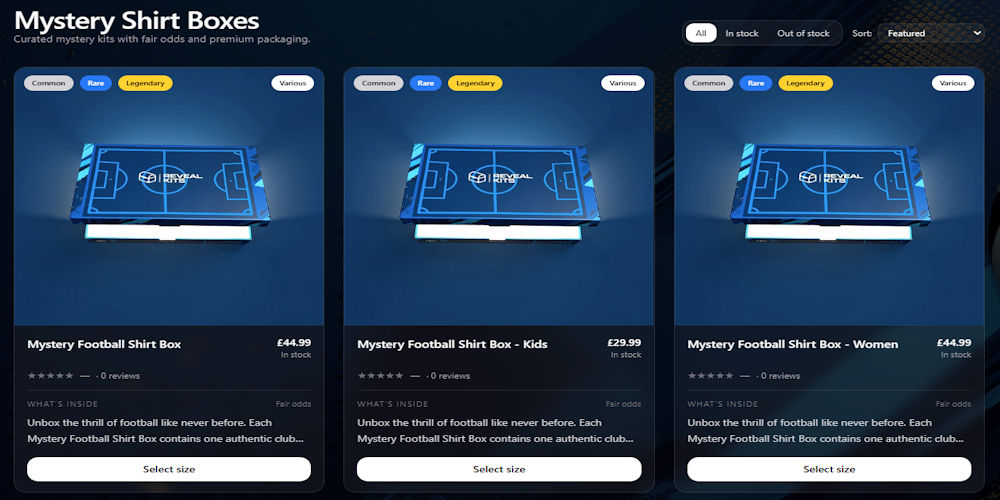
For a fixed fee — usually between £35 and £50 — you submit your size, blacklist a few rival clubs, and wait. Days later, a parcel lands on your doorstep. Inside could be anything: a neon away shirt from Japan’s J1 League, a sleek design from Mexico’s Liga MX, or a cult classic from Germany’s Bundesliga.
You don’t just buy a shirt. You buy the unknown.
So why has this model exploded into a multi-million-pound niche within football culture, and why now?
The Psychology of the Reveal
At its core, the mystery box taps into something primal: the thrill of uncertainty.
It’s the same dopamine spike you felt tearing open a pack of Panini stickers as a kid. In a world ruled by algorithms, where streaming platforms predict your next binge and ads know what trainers you’ve been eyeing, the mystery box offers something rare: genuine surprise.
The unboxing has become content in its own right. Scroll through TikTok or YouTube, and you’ll find thousands of creators filming their reactions. Will they pull a hidden gem or a completely obscure mid-table side from a league they’ve never watched?
That suspense is addictive. And it has transformed shirt collecting from a solitary hobby into a shared spectacle.
Redrawing the Football Map
For decades, global shirt sales have been dominated by the same superclubs: Manchester United F.C., Real Madrid CF, FC Barcelona, Liverpool F.C.. Walk through almost any city in the world and you’ll see their crests on backs and in shop windows.
Mystery boxes flip that script.
Suddenly, a fan in Birmingham is sporting the colours of Kawasaki Frontale, Pumas UNAM, or Kaizer Chiefs F.C.. Shirts from lesser-known leagues become conversation starters. “Who’s that?” replaces “Is that the new Chelsea kit?”
In doing so, mystery boxes democratise football fashion. They widen horizons, spark curiosity, and sometimes even lead fans to adopt unlikely “second teams” based purely on aesthetic loyalty.
The Cure for Template Fatigue
Modern kit design, especially in Europe’s top leagues, has drawn increasing criticism for sameness. When a third kit in the Premier League looks suspiciously like a goalkeeper strip in La Liga, the magic starts to fade.
Mystery boxes thrive in that gap.
Smaller clubs and manufacturers often take creative risks, bold sashes, loud geometric prints, unexpected colour palettes. Designs feel more experimental, less corporate. For style-conscious fans, pulling an unusual shirt signals individuality in a sea of identical replicas.
It also aligns with broader streetwear trends, where obscure sportswear and vintage aesthetics carry cultural currency.
Turning Dead Stock into Treasure
There’s also an overlooked sustainability angle.
The global football shirt industry produces millions of units every season. Not all of them sell. Unsold inventory — “dead stock” — can sit in warehouses or end up heavily discounted.
Mystery football shirts box companies have built an ecosystem around this surplus. By sourcing excess stock from smaller clubs at wholesale prices, they create a win-win:
-
Clubs clear warehouse space
-
Sellers secure affordable inventory
-
Fans get authentic shirts at a fraction of the £70–£90 RRP typical of top-flight releases
It’s not a perfect circular economy, but it’s a smarter alternative to waste.
Not All Boxes Are Equal
Of course, rapid growth brings growing pains.
The barrier to entry is low. Anyone with a website and a bulk order of cheap shirts can call themselves a mystery box retailer. While reputable sellers guarantee authenticity and original tags, horror stories do circulate, counterfeits, low-value clearance items, or shirts available elsewhere for half the price.
In this model, trust is everything. Collectors value authenticity above all. Once that trust is broken, the magic disappears.
The best operators understand that perceived value matters as much as retail value. The experience has to feel fair, or better than fair.
A Community Reborn
Perhaps the most compelling aspect of the trend is the community it has fostered.
Online forums and social feeds are filled with swap posts and haul reveals. If your box delivers a team you’re not keen on, there’s almost always someone willing to trade.
It feels nostalgic, like swapping stickers in the playground. In an era when football discourse is often dominated by transfer drama and refereeing outrage, mystery box culture leans positive. It celebrates design, discovery, and the sheer global diversity of the sport.
The Future of the Mystery Football Shirt Boxes
Will the bubble burst? Possibly. Football fashion trends are notoriously cyclical.
But the mystery football shirts box appears to have staying power because it solves a modern problem: decision fatigue. Instead of scrolling through hundreds of options, you outsource the choice, and rediscover the excitement of not knowing.
In a sport obsessed with data, predictions, and control, there’s something beautifully simple about closing your eyes, tearing open a package, and letting the game surprise you again.
Sometimes, the best way to explore football’s global tapestry is to stop searching, and start unboxing.