
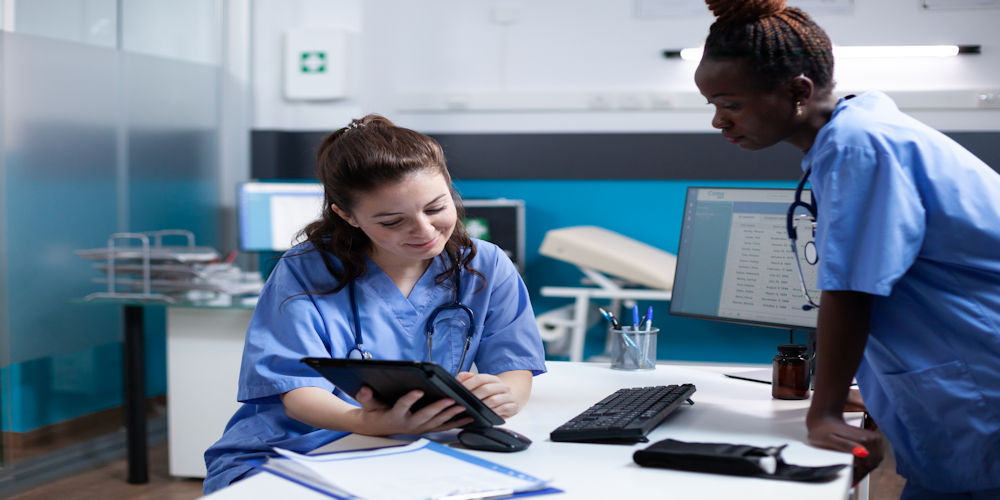
The Nurses’ Station and Patient Well-Being: Why It Matters
Walk into any hospital, and you’ll notice one of the busiest areas is the nurses’ station. It may look like a simple workspace filled with computers, charts, medical equipment, and busy healthcare professionals, but it plays a much bigger role.
The nurses’ station is where staff share information, coordinate care, monitor patients, and bring healthcare teams together. More importantly, it can directly affect how safe, comfortable, and supported patients feel during their hospital stay.
More Than Just a Workplace
At its most basic level, the nurses’ station is the central point where nurses and other healthcare professionals organise their work. They review patient information, discuss treatment plans, communicate with colleagues, and track what is happening across the ward.
But a nurses’ station is about more than efficiency.
For patients and their families, seeing nurses and clinicians working nearby can be reassuring. When someone is unwell, being in hospital can be stressful and unfamiliar. Knowing trained professionals are close by can make that experience feel less frightening.
The station also helps connect patients with the people caring for them. When the station is close to patient rooms, nurses can respond faster when someone needs help getting out of bed, medication, reassurance, or urgent medical attention.
Creating a Sense of Comfort and Reassurance
Hospital stays can leave people feeling vulnerable. Patients may not know what will happen next, how long they will need to stay, or what their treatment will involve.
A visible and approachable nursing team can make a significant difference.
A friendly greeting, a quick check-in, or simply knowing that help is nearby can give patients confidence. These small interactions can help reduce anxiety and make the hospital environment feel more welcoming.
Of course, the design of the nurses’ station matters too. A cluttered, noisy, or difficult-to-access station may unintentionally make patients feel more anxious. A well-organised and thoughtfully designed space, on the other hand, can support both staff efficiency and patient comfort.
Communication Is at the Heart of Good Care
Good healthcare depends on good communication.
The nurses’ station serves as a central meeting point where nurses, doctors, therapists, and other healthcare professionals can share information and coordinate patient care. They may discuss changes in a patient’s condition, review treatment plans, prepare for procedures, or share important updates.
This teamwork helps ensure everyone involved in a patient’s care works from the same information.
Communication with patients and their families is just as important. Nurses often use interactions at the station or in nearby patient areas to answer questions, explain procedures, provide updates, and offer guidance on what happens after discharge.
When patients understand what is happening and why, they are more likely to feel confident and involved in their own care.
Supporting Patient Safety
Patient safety is another major reason the nurses’ station is so important.
From the station, healthcare professionals can monitor activity across the ward and respond when patients need help. Depending on the hospital and ward design, nurses may also have access to monitoring systems, patient records, medication information, alarms, and other technology that helps them identify potential problems.
Being close to patients also makes it easier for staff to respond quickly during an emergency.
This does not mean that a nurses’ station alone guarantees patient safety. Effective staffing, appropriate technology, good communication, infection-control practices, and well-designed clinical processes are all essential. However, when these elements work together, the nurses’ station becomes an important part of a wider system designed to keep patients safe.
The Nurses’ Station and the Patient Experience
Patients often remember how they were treated as much as the medical care they received.
A nurse who takes the time to listen, answer a question, or offer reassurance can have a lasting impact on someone’s hospital experience. These everyday interactions help build trust between patients and healthcare professionals.
The physical environment matters as well.
A well-designed nurses’ station can reduce unnecessary noise, improve organisation, support staff communication, and make it easier for patients to find help when they need it. Small details can influence how patients perceive the quality and compassion of the care they receive.
On the other hand, a constantly noisy, overcrowded, or poorly organised station can create stress for both patients and staff.
This is why nurses’ station design should not focus only on what healthcare professionals need. It should also consider the experience of the people receiving care.
Rethinking the Traditional Nurses’ Station
While nurses’ stations remain important in many hospitals, their traditional design is changing.
Healthcare environments are becoming more focused on flexibility, privacy, infection prevention, technology, and patient-centred care. Some hospitals are moving away from large centralised stations and introducing smaller work areas closer to patient rooms.
Both approaches have advantages and challenges.
A centralised station can make it easier for staff to communicate and access shared resources. Smaller or decentralised workspaces may let nurses spend more time near patients and reduce the distance they need to travel around a ward.
Technology is also changing how nurses work. Electronic health records, mobile devices, remote monitoring, and virtual healthcare tools mean nurses no longer have to access important patient information from one fixed location.
The challenge is finding the right balance between technology, efficiency, privacy, and human connection.
Looking Towards the Future
The nurses’ station will continue to evolve as healthcare changes.
Future designs will likely place even greater emphasis on patient-centred care, staff well-being, digital technology, infection prevention, and flexible working environments. The goal should not simply be to create a more efficient workspace, but to create an environment that supports better care.
After all, the nurses’ station sits at the intersection of people, information, and healthcare delivery.
When it is thoughtfully designed and effectively managed, it can help nurses work efficiently while giving patients something equally important: the feeling that someone is nearby, paying attention, and ready to help.
A Small Space with a Big Role
The nurses’ station may be a familiar feature of the hospital environment, but its importance goes far beyond desks and computers.
It supports communication, teamwork, patient monitoring, safety, and day-to-day care delivery. Just as importantly, it can influence how patients feel throughout their hospital journey.
As hospitals continue to evolve, the nurses’ station should evolve with them. By combining smart design, modern technology, efficient workflows, and a strong focus on patient needs, healthcare organisations can create spaces that work better for both staff and patients.
Ultimately, the best nurses’ station is not simply one that helps healthcare professionals do their jobs. It creates an environment where patients feel safe, supported, respected, and cared for.